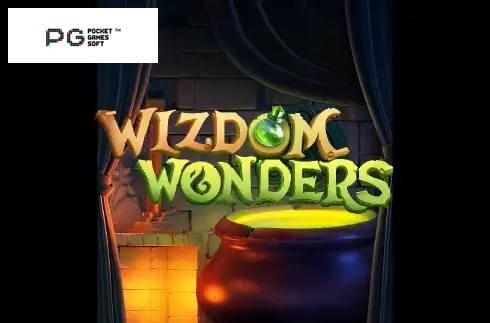







Wizdom Wonders asks a different question from most slots. It is not asking how many identical pictures land across a payline. It is asking if the two halves printed on an open spellbook belong together.
Six books sit in two rows of three. Every book has a left page and a right page, and each page carries half of a magical picture. A completed frog, spider, mushroom, potion, rune, or Bonus emblem pays on that single book. A mismatched pair pays nothing. Once a completed picture has been counted, that book closes and reveals one of three elemental spells. The spell removes more books, replacements drop into the empty positions, and another matching check begins.
This sounds like a small alteration, but it changes how the entire screen is read. The six books are not six reels in the conventional sense. They behave more like six self-contained picture puzzles. A win does not travel left to right, and neighbouring books do not need to agree with each other. Each book succeeds or fails on its own two-page combination.
PG Soft released Wizdom Wonders in 2018, and its structure still feels unusual beside newer titles. The official documentation calls it a six-book page-matching slot with respins, multipliers, and a pick bonus. The multiplier begins at 1x, rises after spell-driven replacement rounds, and can reach 5x before the chain ends. Three collected Bonus pictures open a cauldron game with eight initial bubble picks.
The math is less generous than the playful wizard artwork might suggest. PG Soft's official information sheet lists a theoretical RTP of 94.47 percent, medium session volatility, a 32.32 percent hit rate, and a bonus frequency close to one in 126 paid spins. Those figures give the review a firmer foundation than promotional descriptions built only around magic and bubbles.
The Screen Is a Shelf, Not a Reel Set
The first lesson is visual. Three wooden compartments form the upper row and three form the lower row. An open book occupies each compartment. What looks like one symbol position is actually two page positions joined at the spine.
A frog's left half on one page and the frog's right half on the other page complete a frog. A frog half beside a potion half does not count. The rest of the shelf is irrelevant to that individual result. Five other books may fail while one book pays, or several books may complete different pictures on the same starting spin.
This rule removes the usual concept of adjacent reels. There is no need for three frogs across a horizontal line. One complete frog inside one book is sufficient. The same applies to the other regular pictures and to the Bonus emblem. The official information sheet labels the format Page Matching Reels, which is more accurate than the 3x2 shorthand found in many slot databases.
Calling it a 3x2 slot is not entirely wrong because the screen has three columns and two rows. It is incomplete because a standard 3x2 slot would normally have six ordinary symbol cells. Wizdom Wonders has six book cells containing twelve page halves. The matching decision happens inside each cell, not across the external grid.
The wager is tied to all six books. PG Soft's sheet states six books with a bet of six units per spin. Under the original default configuration, the listed minimum is €0.30 and the maximum is €300. Bet size choices are shown as 0.05, 0.5, and 5, combined with levels from 1 through 10. Local currency conversion and later casino builds may display a different range, so the help screen attached to the active version remains the final reference.
The crystal ball below the shelf replaces the familiar circular spin button. Tapping it flips every page pair. The wizard remains above the books beside a glowing cauldron, reacting when symbols complete or elemental spells appear. A multiplier rail marked 1x through 5x runs immediately above the book grid.
That rail matters because every completed symbol during the active sequence is paid at the multiplier currently illuminated. The first check starts at 1x. If a spell removes books and the replacements produce another win, the multiplier advances by one. A long chain can therefore move from 1x through 2x, 3x, 4x, and finally 5x.
The multiplier resets to 1x when no more complete pictures remain and the next paid spin begins. It does not persist across separate wagers. A 5x finish is the final stage of the current chain, not a permanent account-level upgrade.
One Completed Picture Is Enough
The highest ordinary picture is the frog, listed at 30 times the relevant unit value in common paytable records. The spider follows at 15x, then the mushroom at 12x. Potion bottle and laboratory flask results sit at 6x. The eye and purple rune are commonly shown at 3x, while several lower alchemy marks pay 2x. A completed Bonus picture has a small immediate value and is also stored toward the separate cauldron round.
The figures are easier to understand when separated from the six-book total bet. Each book is effectively funded by part of the spin cost. A displayed symbol payment is then multiplied by the active chain value. Since PG Soft shows cash amounts directly on winning books, the local interface is more reliable than trying to convert every paytable number mentally.
Suppose a potion completes during the first page flip. Its payment is calculated at 1x and appears beneath that book. The book then closes, reveals a spell, and the resulting removal may create fresh book positions. If a frog completes after the replacement and the rail has advanced to 2x, the frog is paid at 2x. The earlier potion is not recalculated; it keeps the multiplier that was active when it completed.
Several books may complete at once. Their cash amounts are added to the spin total, all winning books close, and every revealed spell is processed. The order of spell effects can change how much of the shelf is cleared, but the outcome is governed by the game server rather than by a choice from the player.
There is no Wild symbol repairing a broken page pair. A half frog beside half spider remains a mismatch. The absence of a substituting icon keeps the page rule clean, but it also means many near-matches have no value. The visual design makes those near-matches obvious, which can make a losing shelf feel closer to a payment than it mathematically was.
The half-symbol concept also produces a slower read than a conventional line slot. A player first scans six spines, then compares left and right pages, then watches completed books close. Turbo can shorten the flipping motion, but it does not change which halves were selected or how the resulting spells behave.
Fire, Water, and Lightning Control the Replacement Pattern
A completed book does not simply disappear. After its payment has been counted, the cover closes and reveals Fire, Water, or Lightning. These elemental marks determine which positions are removed before the next matching check.
Fire clears books along the vertical axis. On a two-row shelf, that means the Fire book and the position directly above or below it are removed. A single Fire result can therefore refresh an entire column.
Water clears books along the horizontal axis. It removes the books across the affected row, creating three replacement positions. Since half the shelf changes at once, Water has the broadest predictable reach.
Lightning removes the book carrying the Lightning mark plus one randomly selected book. Its second target can sit elsewhere on the shelf, so the shape of the removal is less regular than the Fire column or Water row.
If more than one winning book reveals a spell, their effects are resolved within the same chain. Overlapping removal areas do not create duplicate positions or extra payments by themselves. They determine which books leave and how many new books enter before the next check.
After the spell effects finish, new books fill the empty spaces. Every newly formed book is checked for a complete picture. A replacement that produces no match ends its part of the sequence. A replacement that produces one or more matches pays and starts another spell phase.
This is why the official documentation uses the term respin even though the entire six-book shelf does not always flip again. The game is refreshing positions selected by the elemental effect. It resembles a cascade, but the removal geometry comes from hidden spell marks rather than from the location of winning symbols alone.
The multiplier advances by one after spells act and replacements are added. It cannot rise past 5x. If the chain reaches the final rail position, later matches in that same sequence remain at 5x until no further win is present.
There is a small but important timing distinction. The books pay first, then close, then reveal spells, then the removal takes place, then replacements arrive, and only then does the next matching check occur. The spell itself is not a cash symbol. Its value lies in creating another set of book combinations under a higher multiplier.
The Multiplier Rewards Depth, Not the First Hit
The multiplier begins at 1x because a single completed book on the opening flip is fairly common. The larger returns depend on the sequence surviving long enough to reach the upper rail positions.
A shelf with several opening matches can pay more immediately, yet a single match that uncovers a strong Water or Fire removal may create the better chain. Number of initial wins and chain length are related, but they are not the same thing.
The most valuable path has several stages. First, at least one book completes. Second, the revealed spells remove useful areas of the shelf. Third, the replacements form new completed pictures. Fourth, the same process repeats while the multiplier rises. The player does not choose the pages, spells, or replacement books, so the mechanic remains a chance system despite its puzzle-like surface.
A chain ending at 2x is common enough to explain the system. Reaching 4x or 5x feels more significant because several consecutive replacement checks had to succeed. The rail gives a clean record of that depth. It also prevents confusion about which multiplier is being applied to the current set of book wins.
Every stage still pays only completed pictures. A 5x rail with six mismatched books ends the chain immediately. The high multiplier cannot turn half-symbols into cash, and it cannot carry into the next wager.
This structure creates an interesting contrast with free-spin multipliers. Many slots increase a multiplier across several nominally free rounds. Wizdom Wonders increases it inside one paid spin and resets as soon as the spell chain stops. What looks like several rounds is one wager being resolved through multiple replacement checks.
The practical result is a rhythm of compact openings and occasional long interruptions. Most spins flip pages, identify a small payment or no payment, and return control. A spell chain temporarily takes control away, moves through its removal stages, and adds each payment to the same win meter.
Bonus Symbols Must Be Collected Inside the Same Spin Chain
The cauldron round needs three completed Bonus pictures. A Bonus match is formed like any other paying picture: its left and right page halves must meet inside one book. When it completes, the symbol is paid and one Bonus point is collected in the circular meter above the cauldron.
The three points may arrive on the opening flip or during replacements created by elemental spells. This makes chain depth important for more than the multiplier. Extra book checks create extra chances to complete the second or third Bonus emblem before the paid spin ends.
Once the third Bonus picture has been stored, no further Bonus symbol payments are collected during that spin. The remaining spell sequence is allowed to finish. The cauldron round begins only after no additional book win remains.
This timing stops the bonus screen from interrupting an unfinished multiplier chain. All main-game cash is settled first. The screen then shifts away from the bookshelf and into the bubble selection.
The official sheet lists a Bonus hit rate of 0.79 percent and a frequency of about one in 126 spins. Those two figures agree after rounding. A frequency near one in 126 is not a schedule; two triggers can occur close together, and a much longer gap can also occur.
The distinction between Bonus symbols and scattered halves matters. Seeing three Bonus halves across different books does not trigger anything. Each stored point requires a complete two-page Bonus picture inside one book. The circular meter tracks successful completed pictures, not visible fragments.
Eight Bubbles Begin the Alchemy Round
The bonus starts with eight picks. Bubbles rise from the cauldron, and each tap reveals one of three result types: a cash prize, extra picks, or nothing.
Cash prizes range from 2 times to 30 times the current total bet according to the official rules. The revealed amount is added to the bonus win meter immediately. The bonus artwork may show coins and a bright collection screen, but the useful figure is the accumulated multiple relative to the stake that triggered the round.
An extra-pick result adds either two or three selections. If the counter shows five picks remaining and a three-pick bubble is opened, the counter rises to eight. Extra picks can therefore extend the round beyond its initial eight choices.
An empty bubble consumes one selection without adding money or another pick. Empty results are part of the published outcome set, so eight initial taps do not guarantee eight separate cash awards.
The official launch material advertises a chance to reach up to 300 times the current bet inside the bonus. That statement refers to the pick round, not to a single 30x bubble. Several prize bubbles and additional-pick results are needed for the total to climb far above the value of one selection.
There is no skill test hidden in the cauldron. The bubbles are presented as choices, but the player has no information that identifies which one contains a cash value. Tapping the left side rather than the right side does not create a repeatable edge. The interaction changes how the result is revealed, not the underlying house mathematics.
Once no picks remain, the collected bonus value is transferred to the round result and the main shelf returns. The multiplier rail begins the next paid spin at 1x. A strong bubble total does not raise future page-matching odds.
The bonus is short compared with a ten-spin mode, but it contains more direct input. Every bubble requires a tap, and extra picks can alter the length. This keeps the cauldron from feeling like an automated win counter while preserving the simplicity of a pick-and-reveal game.
The Official Math Tells a More Interesting Story Than the Marketing
PG Soft's information sheet lists a 94.47 percent theoretical RTP. That means 5.53 percent of wagered turnover is retained by the house in the long-run model before any casino promotion is considered. It does not predict the result of a short session.
The sheet also divides the return into 66.28 percent from the main game and 28.19 percent from the bonus. Those components add to 94.47 percent. Nearly three tenths of the theoretical return is therefore tied to the cauldron round even though it appears only about once every 126 spins.
That division explains why the ordinary shelf can feel restrained. A substantial portion of the game's return budget is reserved for a relatively rare event. Someone who stops before seeing a representative number of bonus rounds may experience a return far from the published percentage in either direction.
The reported full hit rate is 32.32 percent. The main-game rate is 31.53 percent, while the Bonus rate is 0.79 percent. A hit in this context means a recorded paying event according to the test definition; it does not necessarily mean a profitable spin after the six-book wager is deducted.
Medium session volatility is PG Soft's own classification. It sits beside a relatively frequent main-game hit rate and a bonus that concentrates a large share of theoretical return. That combination can produce many small completed pictures with occasional larger corrections from a long chain or bubble round.
The same official sheet records maximum exposure of 415 times the stake in a simulation of one billion spins. This wording is not identical to an absolute mathematical maximum. It states the largest exposure found in the studio's simulation sample.
Several current slot directories publish a maximum win of 3,000x or a maximum coin value of 149,400. Those numbers do not match the older official sheet. They may refer to a later build, a different normalization of coin value, or inaccurate catalogue data. Without a newer PG Soft rule file confirming 3,000x, the active in-game paytable should decide the question.
For an article intended to help a player understand the title, the safe description is clear: the official 2019 document records x415 as the largest simulated exposure in one billion spins, while the pick bonus is promoted at up to 300x the current bet. A casino displaying a larger ceiling should show that ceiling in its local rules and transaction system.
Why 94.47 Percent Feels Different From 94.47 Percent on a Line Slot
Two games can share the same theoretical return and distribute it in completely different ways. Wizdom Wonders assigns 28.19 percentage points to the bonus. A conventional line slot might place more of its return in ordinary symbol combinations or a more frequent free-spin round.
The six-book structure also changes what counts as a visually busy result. Several completed low symbols can appear together, creating multiple cash labels and spell effects. The animation may be long while the final result remains below the total stake.
Conversely, one completed high symbol can expose Water, clear a row, lead to two more matches at 2x, and build toward the bonus meter. The opening screen may look modest while its replacement path creates most of the value.
This is why raw hit frequency should not be read as a profit frequency. A 32.32 percent hit rate says something was paid on roughly that share of rounds in the tested model. It does not say roughly one third of spins returned more than their cost.
The official return is also lower than the 96 percent area common among many modern online slots. A difference of 1.53 percentage points between 94.47 and 96.00 sounds small per spin, but it becomes meaningful across high turnover. At 100,000 units wagered, the theoretical house margin is 5,530 units at 94.47 percent compared with 4,000 units at 96 percent.
That comparison remains theoretical. A real session can finish far above or below either expectation. Its purpose is to show that RTP differences apply to total turnover, not merely to the opening deposit.
Bet Size, Bet Level, and the Six-Book Cost
The original rule sheet separates Bet Size from Bet Level. Bet Size determines the underlying unit value, while Bet Level scales that unit. The six books are funded on every paid spin, so the final Bet Amount is the number that matters for cash exposure.
Under the documented defaults, Bet Size choices are 0.05, 0.5, and 5, while Bet Level runs from 1 to 10. The minimum total is €0.30 because six books are active at 0.05 each. The documented maximum is €300.
Some later directories display a maximum of 360. That discrepancy is another reason to read the live help screen rather than copying a lobby card. Currency configuration, studio revision, and operator limits may alter the visible range.
Changing the bet does not buy a different symbol set or a higher multiplier ceiling. The same six books, 1x to 5x rail, elemental spells, and bubble rules remain in place. Cash values scale with the total stake.
If a Philippine lobby shows a ₱6 total bet, each of the six books is effectively carrying one peso under the basic six-unit structure. Fifty paid spins create ₱300 in turnover before returns. At ₱30 per spin, the same count creates ₱1,500 in turnover. Spin count alone does not describe the amount risked.
The maximum-bet button changes Bet Size and Bet Level together. On a compact phone interface, that is a much larger jump than increasing one level. The total displayed next to the crystal ball should be checked after opening or closing the bet menu.
A Vertical Game Presented in Horizontal Review Images
Wizdom Wonders was built around a tall phone screen. PG Soft's official document specifies an optimal 1080x2340 display and a 19.5:9 aspect ratio. The wizard, cauldron, multiplier rail, six books, crystal ball, and controls are stacked from top to bottom.
That portrait design fits the mechanic. Each open book remains large enough for both page halves to be read, and the wizard has space above the shelf without shrinking the controls. The bubble round also works naturally as bubbles rise vertically from the cauldron.
The three review images shown here use landscape editorial layouts because the requested publishing format is 1672x941. The internal phone captures remain unaltered official screens; several portrait frames are placed beside one another so the page-matching sequence and bonus progression can be compared in one horizontal image.
On a real phone, the upper cauldron can become partially obscured by browser bars if the game is not opened in full-screen mode. The six books and total bet should remain visible before a spin is started. Rotating the device may cause the casino wrapper to add empty side space rather than redesign the game's portrait cabinet.
The text on the wooden banner above the books changes during play. It may display a win amount, instructions about Bonus symbols, or a prompt connected to multiplier growth. The cash labels placed directly beneath winning books are more useful when auditing which positions paid.
Sound and Animation Do More Than Decorate the Shelf
The page-flip sound marks the boundary between a paid spin and its first result. Completed books receive a short magical cue, then close with a heavier wooden impact before elemental marks appear.
Fire, Water, and Lightning have different visual signatures. Fire uses red-orange light, Water sends a blue wave through the selected books, and Lightning strikes with a white-blue flash. These distinctions make the removal geometry easier to follow without reading a text label.
The multiplier rail adds a rising cue as the chain moves upward. The sound helps a player notice that replacement wins are now worth more than opening wins. At 5x, the sequence holds the highest rail state until the final mismatch ends the spin.
The bubble round changes to a darker cauldron view. Each selection has a short pause before its content is shown. Prize bubbles use coin effects, extra-pick bubbles raise the counter, and empty bubbles disappear without adding to the meter.
The pacing is theatrical but not excessive by 2018 mobile standards. Long chains can repeat the same book-closing sequence several times, and the bubble round demands manual taps. Turbo shortens main-game reel motion but should be disabled during a first test so the relationship among complete picture, spell type, replacement area, and multiplier rise remains visible.
What a Demo Test Should Actually Check
A useful demo session is not a search for the largest screenshot. It is a check that the rules behave as described.
First, watch a single completed book. Confirm that the cash amount appears before the book closes. Then identify the elemental mark and compare the removed positions with its axis rule.
Second, watch the multiplier rail after replacement books arrive. The next set of completed pictures should use the higher illuminated value. When no more match remains, the next paid spin should return to 1x.
Third, track the Bonus meter. Only a complete two-page Bonus picture should add one point. After the third point, the remaining spell chain should finish before the bubble screen starts.
Fourth, count the initial bubble picks. The round begins with eight. A revealed two-pick or three-pick result should increase the counter by the stated amount, while an empty result should reduce it without adding money.
Fifth, compare the total bet displayed by the interface with the amount removed from the demo balance. The six-book stake should be treated as one paid spin, even when several replacement stages follow.
These checks reveal more about Wizdom Wonders than a short win montage. They show which events are payments, which are removals, which belong to the same wager, and which values reset before the next wager.
Philippine Casino Versions Need Local Verification
PG Soft games appear across many Philippine-facing platforms, but the studio does not control every lobby label, currency conversion, promotion, or withdrawal rule. The active casino controls account balances and transaction history.
A peso stake shown inside Wizdom Wonders should match the amount recorded in the operator history. If a connection drops during a long spell chain or bubble round, the round ID and history result are more important than the final animation seen on the phone.
An operator may also mark the title as unavailable even though older review sites still host screenshots. Some slot catalogues indicate that Wizdom Wonders has been removed from parts of their network. Availability therefore depends on the current casino catalogue and market, not only on the game's original 2018 release.
Deposit methods such as GCash or Maya do not alter the RTP, hit rate, or symbol selection. They affect payment handling at the casino level. Bonus-credit wagering conditions also sit outside the slot rules.
The official information sheet dates from March 2019 and describes version 2.5.R264. A casino running a later revision should expose its own help page. If its maximum win, wager range, or RTP differs, the values attached to that playable build take precedence over an old marketing article.
Where Wizdom Wonders Works and Where It Shows Its Age
The page-matching idea remains easy to recognize. Two halves either complete a picture or they do not. The six-book shelf gives every position an independent purpose, and the elemental spells create replacement patterns that can be understood after one or two examples.
The multiplier is also honest about its state. It begins at 1x, climbs one step after successful spell replacement, stops at 5x, and resets when the chain finishes. There is no hidden meter that must be remembered across sessions.
The bonus complements the theme rather than copying a free-spin template. Three completed alchemy emblems activate a cauldron, and the player pops bubbles for prizes or extra selections. It is a short interaction with a clear end condition.
The weaknesses are equally visible. The 94.47 percent RTP is below many newer releases. A large 28.19 percent share of theoretical return sits in the bonus, so ordinary play may feel underpowered during a long trigger gap. Empty bubbles can also make a rare bonus finish with less impact than its arrival suggests.
The interface predates several conveniences common in newer PG Soft titles. Its bet menu and lower navigation icons are small, the portrait cabinet can feel cramped inside a casino browser frame, and repeated book-closing animations slow a long chain unless Turbo is used.
The maximum-win information found online is inconsistent. A careful review cannot repeat a 3,000x claim as settled fact when PG Soft's archived sheet records x415 as the largest simulated exposure and advertises up to 300x in the bonus. The local rule screen must resolve that difference.
Final Reading: The Puzzle Is Stronger Than the Payout Profile
Wizdom Wonders succeeds because its central rule is both strange and immediately visible. Six books replace paylines. Two page halves replace symbol runs. Fire, Water, and Lightning replace ordinary cascade removal. The result still belongs to chance, but it does not look like another reskinned five-reel cabinet.
Its best moments occur when the mechanism reveals its layers. A completed picture pays, the book closes, Water clears a row, replacements create two new matches, the multiplier moves to 2x, another spell clears more positions, and a third Bonus emblem finally reaches the cauldron. Every stage follows a rule visible on screen.
The bubble round is simpler. Eight picks open the sequence, cash values range from 2x to 30x, two-pick and three-pick bubbles extend it, and empty results consume a choice. The advertised 300x bonus ceiling requires several favourable selections rather than one decisive bubble.
The official numbers keep the verdict grounded. RTP is 94.47 percent. Medium volatility and a 32.32 percent hit rate describe the tested session profile. The Bonus appears near once per 126 spins and accounts for 28.19 percentage points of theoretical return. Maximum simulated exposure in the archived one-billion-spin test is x415.
Those figures stop Wizdom Wonders from being an easy recommendation based only on originality. The mechanic is memorable, but the return percentage is dated and the rare bonus carries a large part of the math. Someone comparing it with a newer PG Soft title should inspect both RTP figures rather than assuming the newer or older game is equivalent.
As a piece of slot design, Wizdom Wonders deserves attention. It turns a bookshelf into six miniature matching puzzles and uses hidden spells to decide how the shelf is rebuilt. As a real-money product, it deserves a careful check of the active help file, especially the RTP, stake limits, version number, and maximum win.
The wizard is not really asking the player to master alchemy. He is asking the player to understand a chain: match the pages, expose the spell, replace the books, raise the multiplier, collect three Bonus pictures, and then test eight bubbles. Once that chain is understood, Wizdom Wonders becomes one of PG Soft's clearest examples of a playful interface built over a precise mathematical loop.